

W.K. 'Paddy' Hebbard
THE GOLDEN ERA OF BOULDER FOOTBALL | 1920–1950



BCFC
1913
GFL FB
1919
WA Hall of Fame
Goldrush Era - 2000GFL All Star Team
All Star Teams



East Perth
Team of the Century
East Perth
Cpt Coach 1925
South Fremantle
1931 - 1932
WA State Teams
1914, 1923–1925

Before Western Australian football celebrated its champions, the Goldfields had already discovered Paddy Hebbard.
TIGERS ALL-STAR — CENTRE HALF-FORWARD
There was a time when some of Western Australia's finest footballers were not discovered on the grand stages of Perth, but on the dusty football grounds of the Eastern Goldfields. Among them was a remarkable footballer named W.K. ‘Paddy’ Hebbard. A magnificent mark, a powerful and accurate kick, and a player blessed with an exceptional understanding of the game, Hebbard would become one of the most highly regarded centre half-forwards of his generation. His journey to football greatness began in 1911, wearing the colours of the Boulder City Football Club.
A CHAMPION EMERGES ON THE GOLDFIELDS
For the next decade, Hebbard became one of the outstanding figures in Goldfields football. Playing at centre half-forward, he possessed that rare combination of strength, skill and football intelligence. He could command the air, read the play ahead of his opponents and deliver the football with remarkable precision. He was not simply a footballer who accumulated possessions. He was a player who could influence the direction of a match.
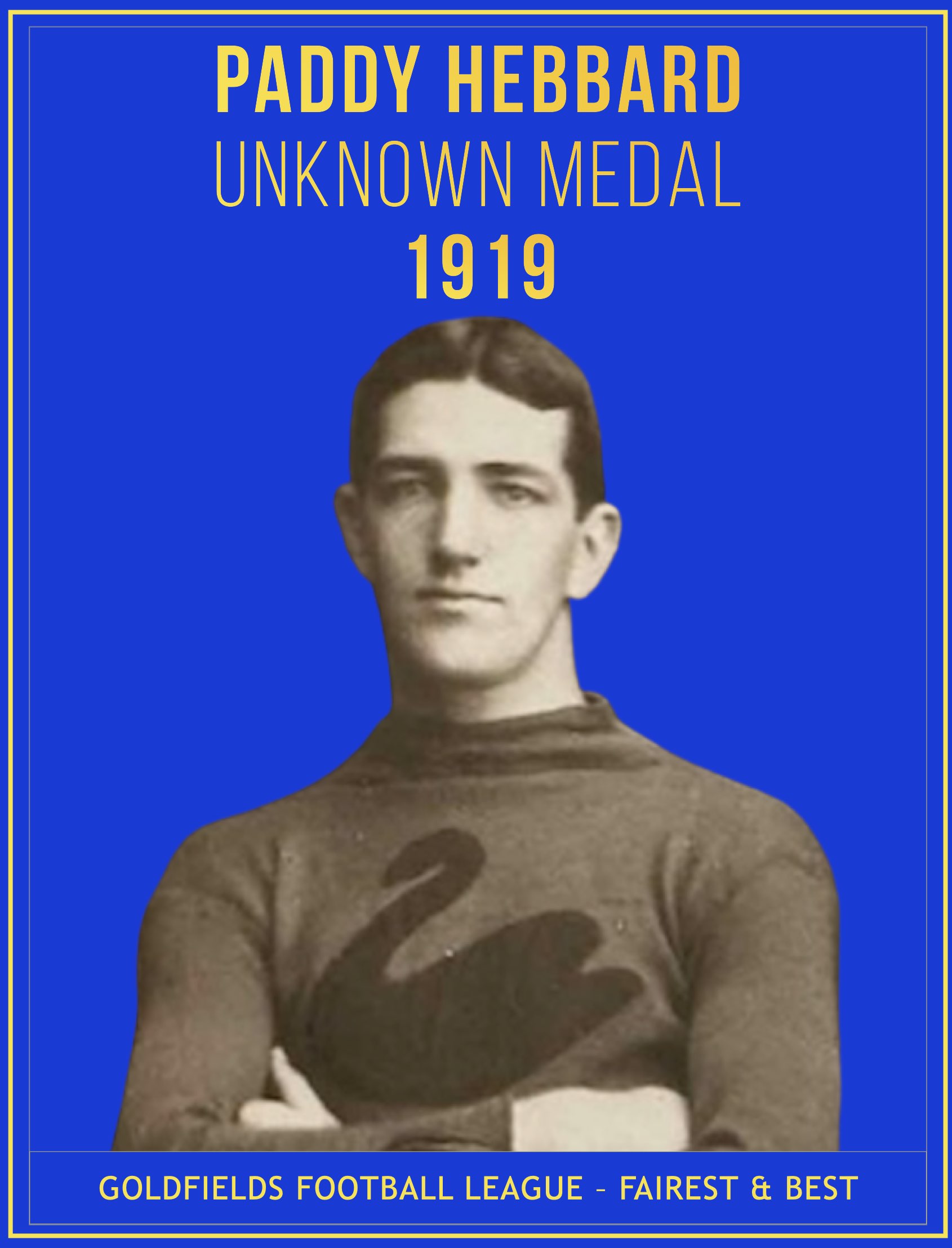
In 1913, Hebbard was a member of Boulder's premiership team, establishing himself among the club's early champions. By 1919, his reputation had reached another level. That season he was awarded the Goldfields Fairest and Best, recognition of his standing among the finest footballers in the competition. For the Tigers, he had become much more than a talented player. He was one of the great football identities of the Goldfields.
FROM BOULDER TO EAST PERTH
In 1921, after a decade with Boulder City, Hebbard took his talents to the metropolitan competition, joining East Perth. He arrived at a remarkable time in the Royals' history. East Perth was building one of the most formidable teams in Western Australian football, and Hebbard became an important contributor to a side that captured three consecutive premierships in 1921, 1922 and 1923. His exceptional marking, intelligent positioning and beautifully directed foot passing made him a formidable presence across half-forward. In his first season with East Perth, he also became the club's leading goalkicker. The footballer who had developed his craft on the Goldfields was now demonstrating those same qualities against the best players in the State.
THE HONOUR OF CAPTAINING WESTERN AUSTRALIA
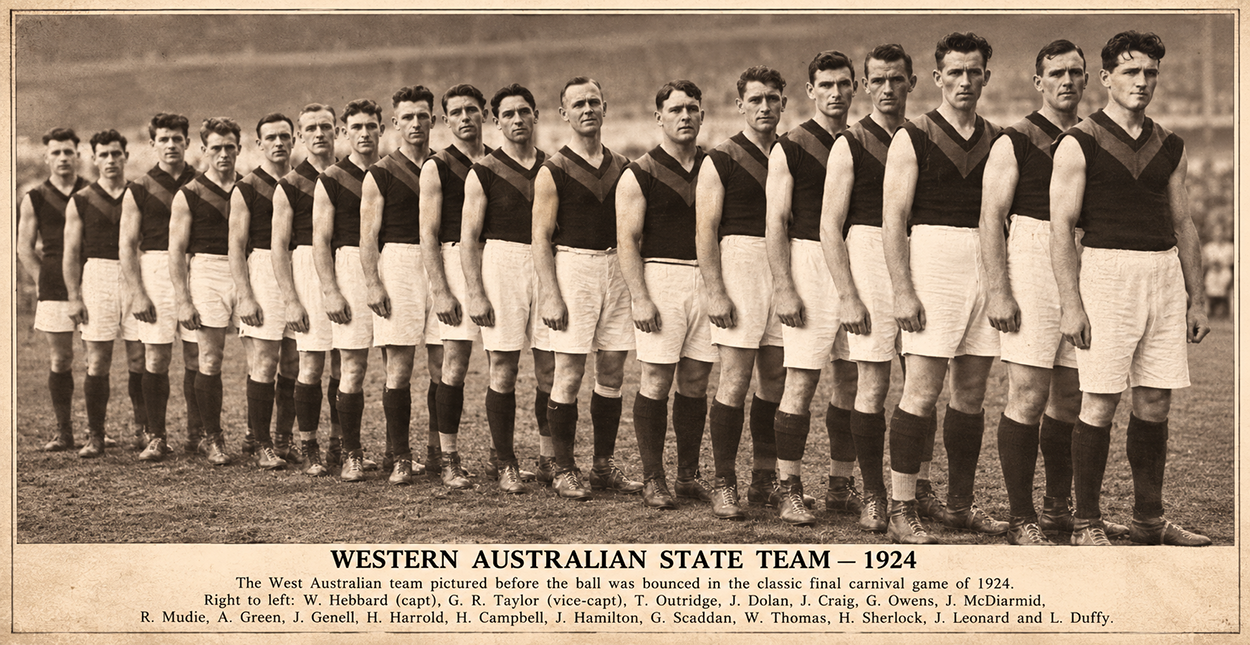
Hebbard's ability was recognised well beyond club football. He represented Western Australia in 1914 and again during the 1920s, becoming a respected member of the State's representative teams. In 1924, he was entrusted with the captaincy of Western Australia at the national football carnival. It was one of the highest honours available to a footballer of his era. For a player whose senior career had begun with Boulder City in 1911, the journey from the Goldfields to captaining his State was extraordinary.
The following year, in 1925, Hebbard assumed the demanding role of captain-coach of East Perth, further demonstrating the respect he commanded as both a footballer and leader.


1913 — REDEMPTION FOR THE TIGERS
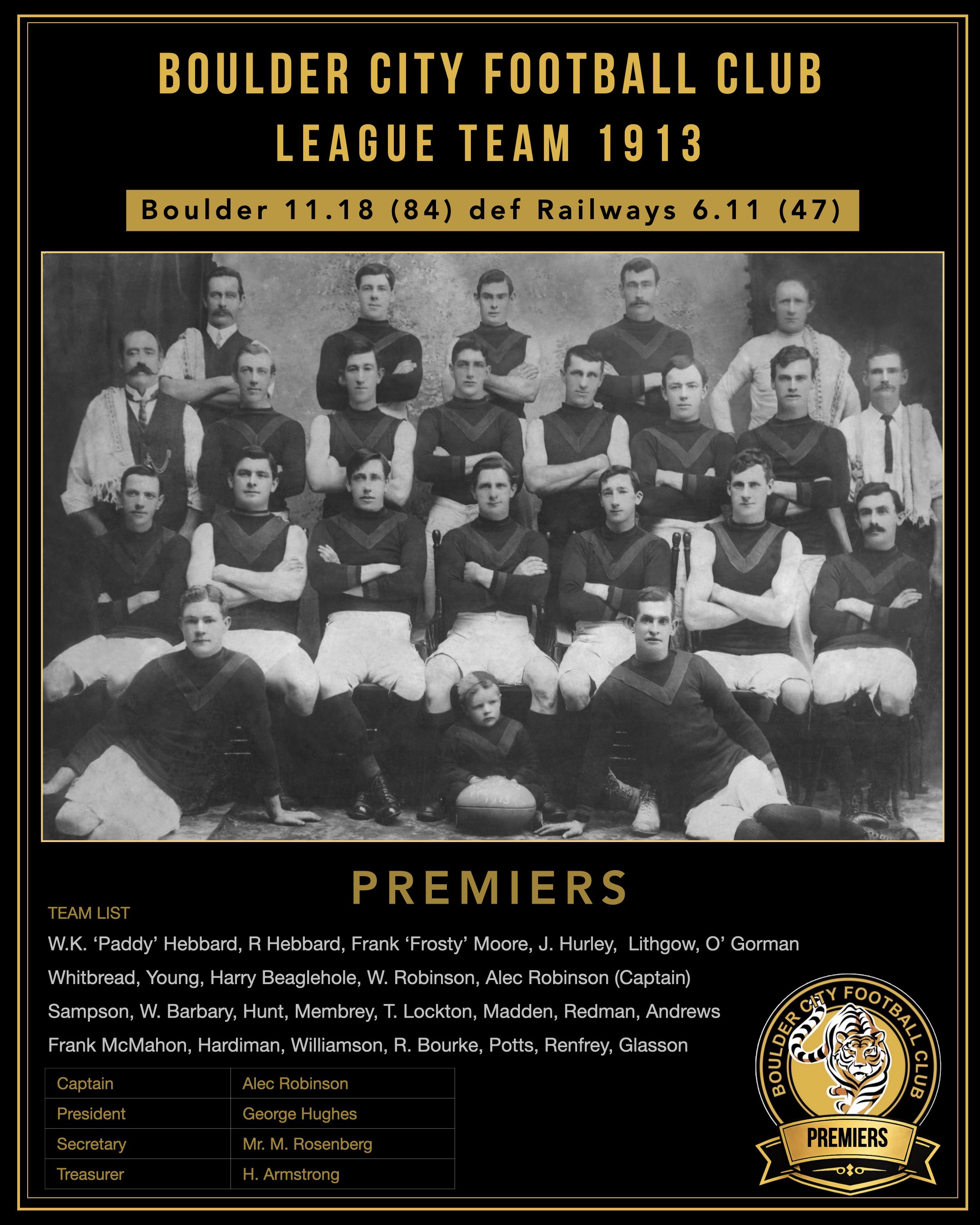
Boulder City Claims the Premiership After the Controversy of 1912 Twelve months earlier, Boulder City had surrendered its opportunity to contest the Goldfields Football League premiership following a bitter financial dispute with the League. In September 1913, there would be no such controversy. This time, the Tigers settled the matter on the football field. After defeating minor premiers Railways by 39 points on 14 September, Boulder faced the same opponents seven days later when Railways exercised their right of challenge.
Before the season's largest crowd at Boulder Recreation Reserve, the Tigers delivered a commanding performance. Boulder led by 23 points at quarter-time, 38 points at half-time and 56 points at the final change. Railways rallied late, but the result was beyond doubt.
BOULDER CITY 11.18 (84) def RAILWAYS 6.11 (47)
Hurley, Redman, Beaglehole, Young, Alex Robinson and Paddy Hebbard were among the prominent Tigers. For the footballers who had endured the disappointment of the previous season, the victory represented a fitting conclusion to a remarkable chapter in Boulder City's history.
1912 — A PREMIERSHIP FINAL NEVER PLAYED.
1913 — A PREMIERSHIP WON BEYOND DOUBT.
The Tigers were premiers again.


A FOOTBALL LIFE BEYOND THE PLAYING FIELD
Hebbard's contribution to Western Australian football did not end when his playing career concluded. His knowledge of the game and understanding of footballers made coaching a natural progression. In 1931 and 1932, he coached South Fremantle, continuing a football journey that had already taken him from the Goldfields to the highest levels of the game. Decades later, his achievements received further recognition.
He was selected in the East Perth Team of the 20th Century (First Half) and inducted into the West Australian Football Hall of Fame. Those honours recognised a footballer whose influence had extended across clubs, competitions and generations. But for Boulder City, there was always something particularly special about his story.He had been a Tiger first.
THE GOLDFIELDS ALL-STAR
When the great footballers of the Goldfields are considered, Paddy Hebbard's name belongs among the very finest. His selection at centre half-forward in the Goldfields All-Star Team recognises a player whose abilities stood the test of time. He was part of an extraordinary football nursery that produced champions who would later dominate metropolitan football and represent Western Australia. Yet Hebbard's achievements also remind us that the Goldfields was never simply a stepping stone to greater football opportunities. It was a great football competition in its own right, producing players of exceptional ability, courage and character. Paddy Hebbard was one of its finest examples.
CAREER RECORD | 1911–1928
Boulder City Football Club — 1911–1920
-
Approximately 84 games
-
1913 Boulder City Premiership Player
-
1919 Goldfields Fairest and Best
East Perth Football Club — 1921–1928
-
72 games, 73 goals
-
Premiership Player — 1921, 1922, 1923
-
Leading Goalkicker — 1921
-
Captain-Coach — 1925
Western Australia
-
11 State appearances, 15 goals
-
Represented WA — 1914, 1923–1925
-
State Captain — 1924
Coaching and Recognition
-
South Fremantle Coach — 1931–1932
-
East Perth Team of the 20th Century (First Half)
-
WA Football Hall of Fame
-
Goldfields All-Star Team — Centre Half-Forward
Career statistics: 167 recorded or estimated games across Boulder City, East Perth and Western Australia. Boulder City's early playing records are incomplete.
A TIGER LEGACY
More than a century after he first pulled on a Boulder City jumper, Paddy Hebbard remains one of the outstanding footballers to have emerged from the Eastern Goldfields.
-
A premiership Tiger.
-
A Goldfields Fairest and Best winner.
-
An East Perth premiership champion.
-
A Western Australian State captain.
-
A Hall of Fame footballer.
His career took him to the very top of Western Australian football, but its foundations were laid on the football grounds of Boulder. W.K. ‘Paddy’ Hebbard — a champion of the Goldfields, a legend of Western Australian football, and forever part of the Boulder Tigers story.


