Les Andrews
THE TIGER WHO REFUSED TO QUIT


Podcast Available
League Coach
1970
GFL COLTS FB
1964
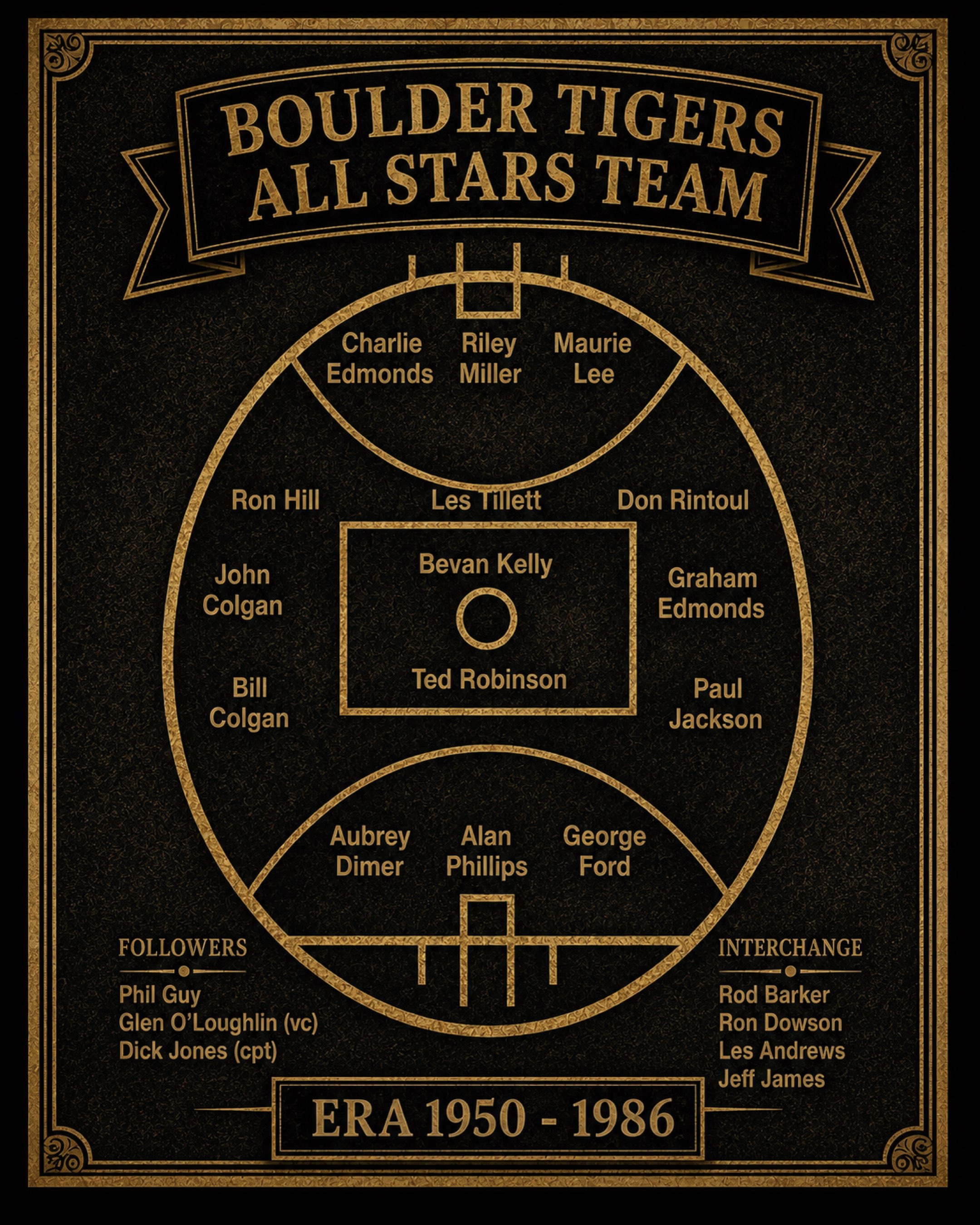
All Star Team


A Football Career of Promise, Courage and Determination
Boulder Tigers Digital Museum | Sunday Story
Not every great football story is measured in premierships, medals or games played. Some are measured in courage. Others leave us wondering just how far a gifted footballer might have gone had circumstances been different. The story of Les Andrews is one of those.
A naturally talented footballer whose early promise suggested an outstanding career, Les possessed the skills, intelligence and composure to make his mark well beyond the Goldfields.
But football can be a cruel game. And for Les Andrews, the greatest opponent would not be wearing another club's jumper. It would be injury.
1960 — The Young Tiger
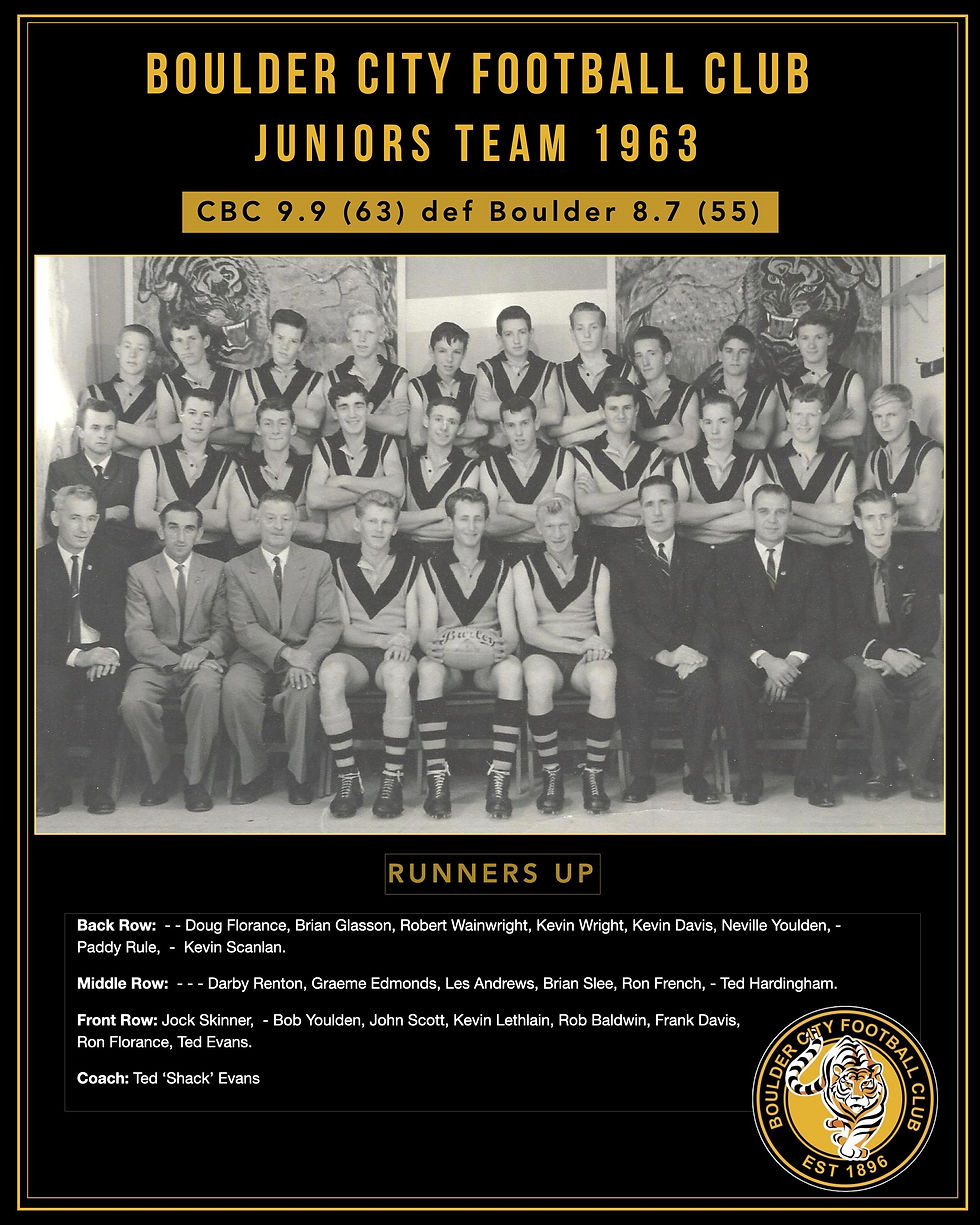
The story begins in 1960. A 12-year-old Les Andrews was already showing his football ability as a member of an undefeated Boulder junior side. Even at that young age, the signs were there. Les was a natural footballer — clever in possession, composed under pressure and blessed with an ability to read the game. And he possessed a particular skill that would become one of his trademarks.
The long drop kick. In an era when kicking was an art form, Les could send the football extraordinary distances with the traditional drop kick. It was a weapon that set him apart.
1961–1964 — A Star on the Rise
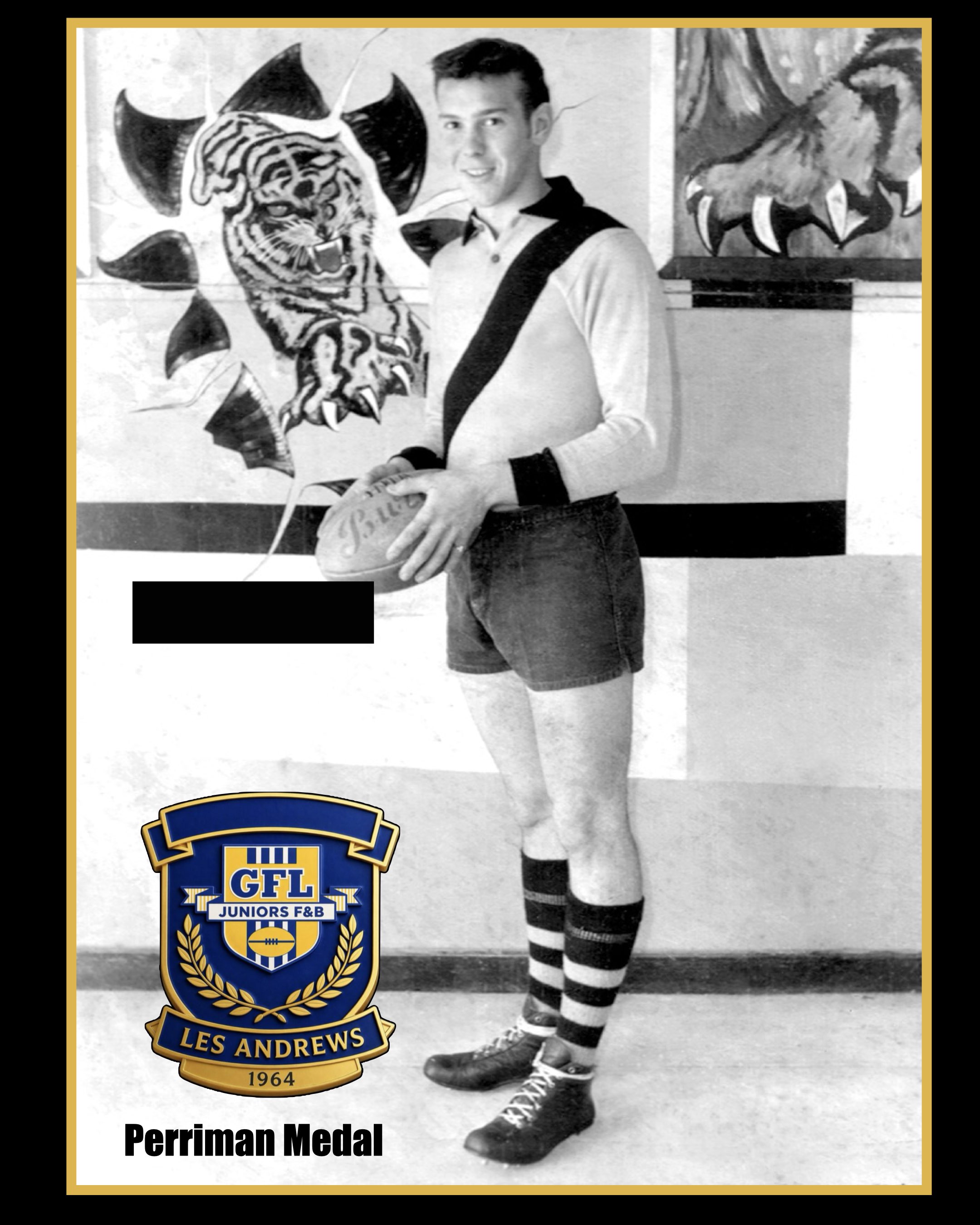
Recognition came quickly. In 1961, Les was selected in the State Schoolboys team — remarkably, the only country boy chosen. For a youngster from the Goldfields, it was a significant achievement and an early indication of his potential. By 1964, his development had continued, culminating in the Goldfields National Football League Juniors Fairest & Best award. From an undefeated junior side to State Schoolboys honours and a league junior award, Les was building an impressive football résumé.
Greater opportunities were approaching.
1965–1967 — The South Fremantle Years
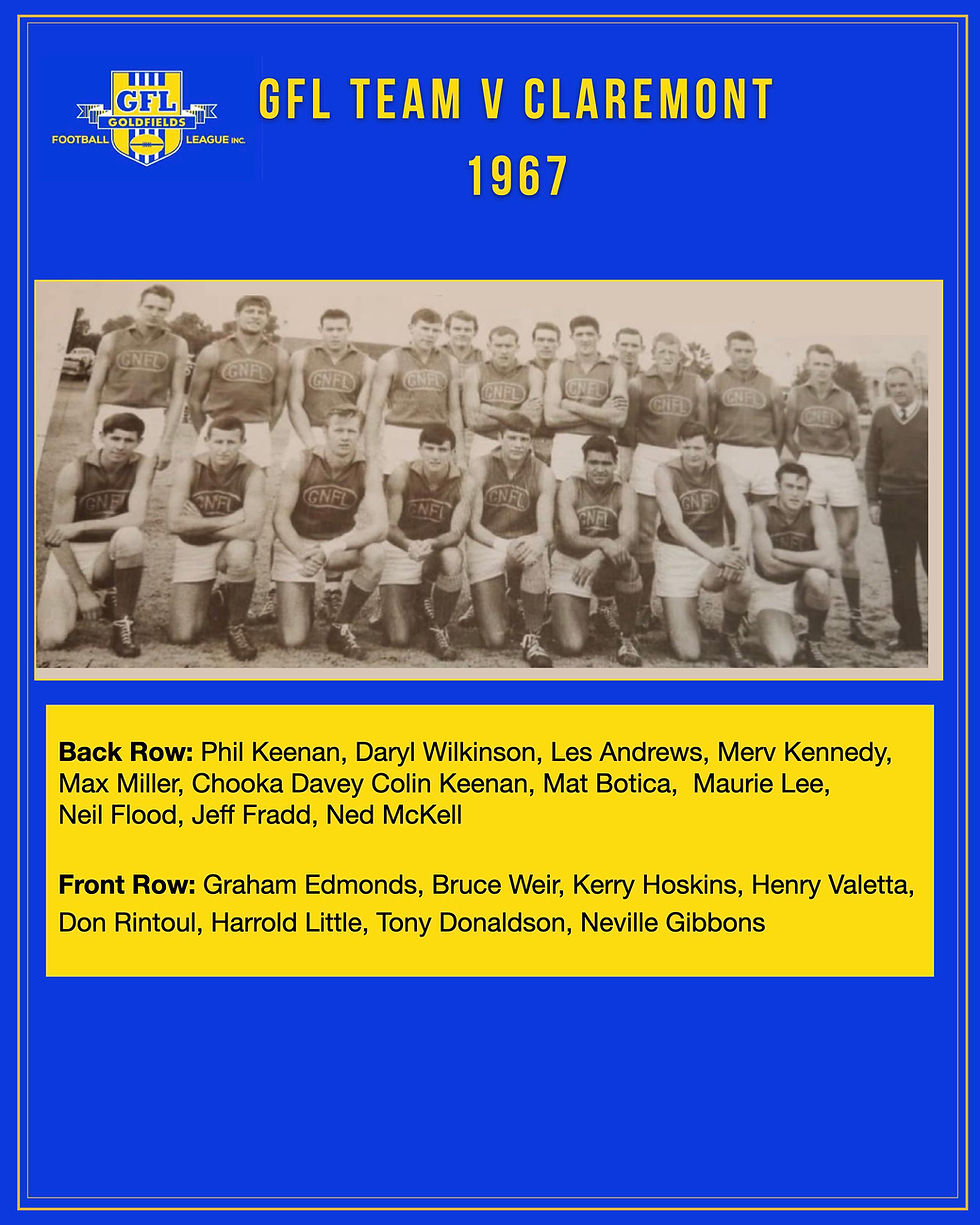
Les's ability attracted attention beyond Boulder. During 1965 and 1966, he was involved with South Fremantle Football Club, taking his football journey into the stronger competition of the Western Australian Football League. In 1967, he appeared at centre half-forward against Claremont. It was a position suited to his football intelligence, marking ability and powerful kicking. The pathway was there. A young Tiger from Boulder had taken his talents to the city, and the possibilities were exciting. But then came the setback that would change the direction of his football career.
The Cruellest Opponent — Injury
Both knees.First one. Then the other. For a footballer whose game depended on movement, balance and the ability to compete, serious injuries to both knees were devastating. And this was an era long before today's advances in surgical techniques, rehabilitation and sports medicine. In those days, injuries of that nature could bring a promising football career to an abrupt end. For Les, the question was no longer simply how far he might progress. It was whether he could continue playing at all. But there was something about Les Andrews that injury could not take away. His football brain. His determination. And his will to compete.
1968–1970 — The Tiger Fights Back
Les continued playing. He adapted his game, relied on experience and intelligence, and found ways to compete despite the physical setbacks. The Tigers reached the Grand Finals of 1968 and 1969, with Les part of those campaigns. In 1969, he captained the Boulder side remembered as the Siren Gate Team, adding another chapter to his association with the club. Then, in 1970, Les took on the responsibility of coaching Boulder's League side.
For a footballer whose career had been threatened by serious injuries, it was a remarkable continuation of his involvement in the game. He had gone from promising junior to State Schoolboy, from South Fremantle footballer to injured veteran, and ultimately to Tiger captain and coach. Not the straightforward career that once seemed possible. But a football journey worthy of considerable respect.
Beyond the Boundary
Football was only one part of Les Andrews' life. Away from the game, his journey took him into a variety of ventures and interests. From drilling rigs to hotels and racehorses, Les applied himself to opportunities well beyond the football field. It was a life that reflected many of the qualities he had demonstrated as a player.
The ability to adapt. The confidence to take on a challenge. And the determination to keep moving forward.
What Might Have Been
Football history naturally celebrates the champions whose careers unfolded without major interruption.
The premiership heroes. The medal winners. The players whose achievements fill the honour boards. But there is another side to the game. The talented footballers whose careers were altered by injury, circumstance or simple misfortune.
Les Andrews belongs in that conversation.
-
A State Schoolboy at a young age.
-
1964 Goldfields Junior Fairest & Best.
-
A footballer who earned his opportunity at South Fremantle.
-
A Tiger captain and coach.
-
Goldfields Combined Team Representative
-
And a man who continued competing when his body gave him every reason to stop.
We will never know how far Les might have gone without those knee injuries. But perhaps that is not the most important part of his story. What matters is what he did when the opportunities began to disappear.
He kept going. And in doing so, Les Andrews demonstrated that football character is measured by much more than natural ability.
A Tiger Worth Remembering
Some players are remembered for what they won. Others for the way they played. And some deserve recognition for the courage it took simply to keep playing. Les Andrews — the gifted young Tiger whose career was tested by injury, but whose determination never deserted him.
One Club. One Family. Forever Tiger.
Boulder Tigers Digital Museum
Sunday Story Collection | Preserving the people and stories behind 130 years of Black and Gold.