

BOULDER CITY FOOTBALL CLUB · EST. 1896
Brian Macgregor
GOLDFIELDS FOOTBALLER TO TIGER LEGEND

PLAYER SNAPSHOT
ERA
1970s - 1990s
POSITION
Full Back
BCFC
Premiership Coach 1982
League Coach 1971 - 72 - 82 - 83 - 84
Reserves Coach 1976
Juniors Premiership Coach 1975
Life Member
President
Secretary
Treasurer
GFL
League Coach - 6 occasions
U/20 Coach - 4 occasions
Life Member
Golden Mile Footballer of the Year 1959
OTHER
Sporting Hall of Fame Inductee
East Perth 1960 - 1967
HONOURS & ACHIEVEMENTS
Explore the honours that shaped Brian Macgregor's football career.
SELECT AN ICON TO DISCOVER MORE
BOULDER CITY FOOTBALL CLUB

#66 1986

1982

1985

Secretary - Treasurer
GOLDFIELDS FOOTBALL LEAGUE
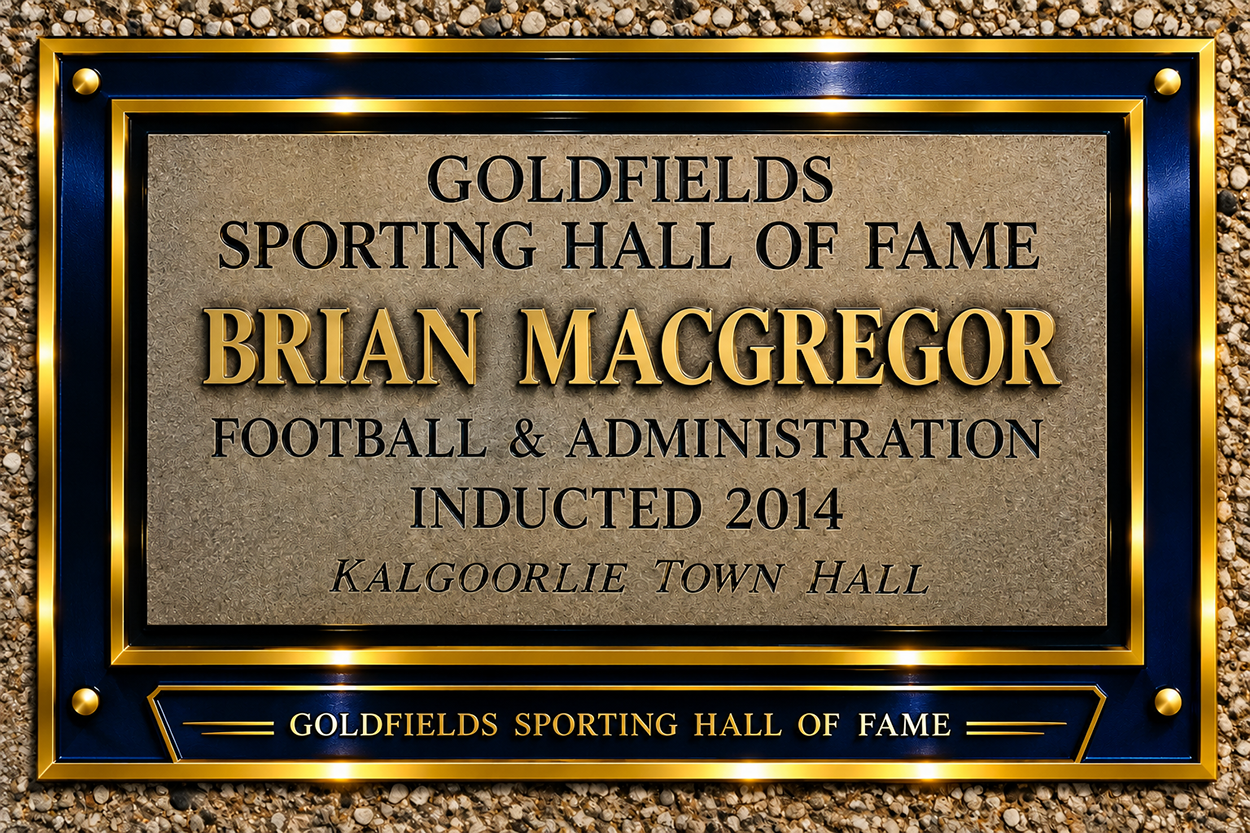
Inducted 2014

1996
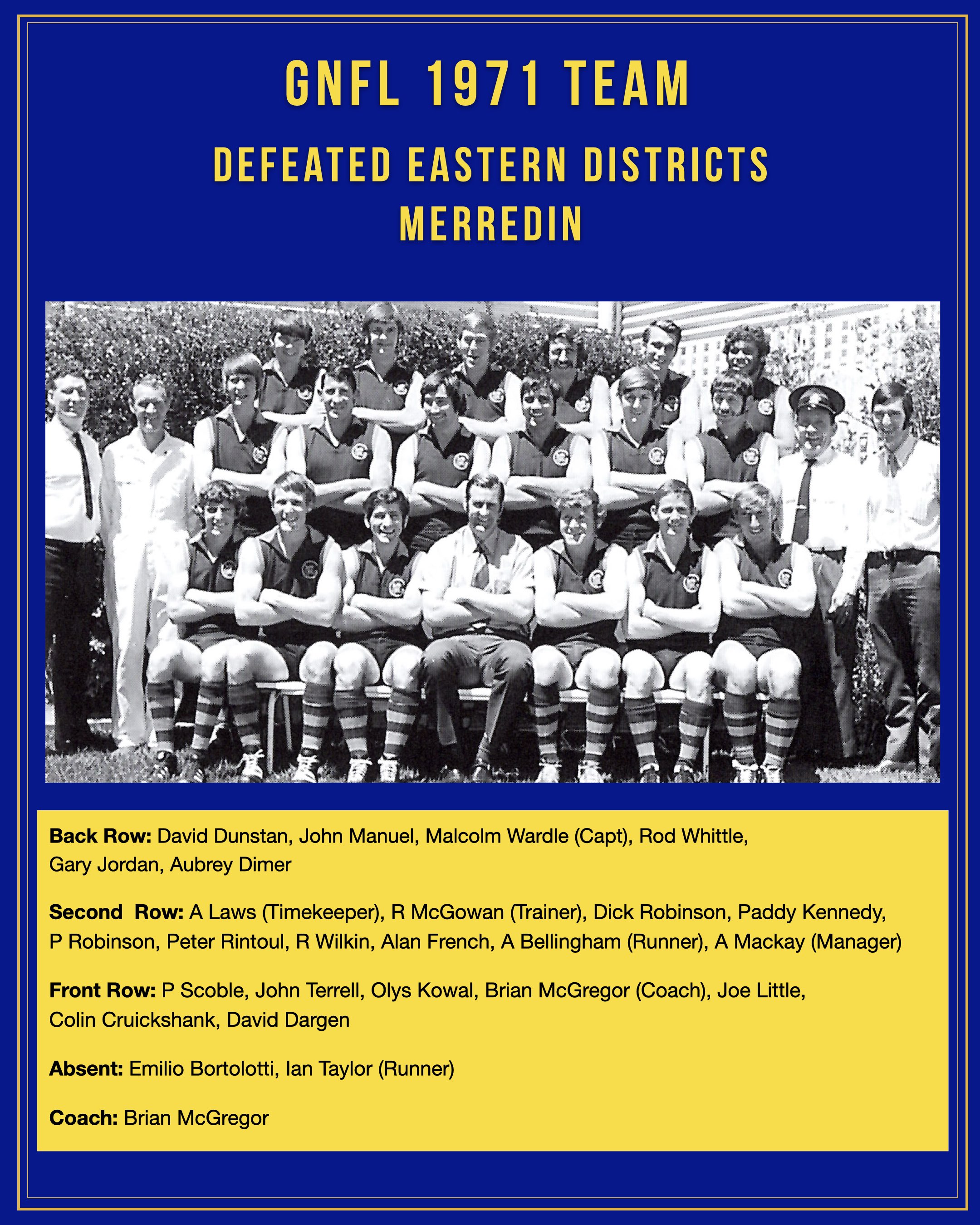
6 Times

4 Times

1950 - 1993

Player
OTHER HONOURS

150 Games
COACH - CLUB LEADER - LIFE MEMBER - HALL OF FAME INDUCTEE
Some football careers are remembered for the games played, the opponents beaten and the premierships won. Others leave a legacy that reaches far beyond the playing field. Brian “Bulla” Macgregor belongs firmly in the second category. From his early football days with Mines Rovers to 150 League appearances for East Perth, and ultimately to his years of service with the Boulder City Football Club, Macgregor's story is one of talent, determination, leadership and an enduring commitment to Goldfields football.
THE BOY FROM THE GOLDFIELDS
Brian Macgregor began his football journey with Mines Rovers, where his natural ability, fierce competitiveness and powerful kicking quickly attracted attention. A junior premiership in 1954 was an early highlight. By 1958, he had progressed into senior football, and in 1959 he won the Footballer of the Goldfields award.
The young ruckman was attracting interest from Perth clubs. South Fremantle made an approach. Perth showed interest. But it was East Perth that secured his signature. In 1960, Brian Macgregor headed to Perth to test himself against some of Western Australia's finest footballers.


150 GAMES WITH THE ROYALS
At East Perth, Macgregor found himself surrounded by some of the great names of Western Australian football, including Polly Farmer, Ted Kilmurray and Jack Sheedy. Originally a ruckman, he developed into a dependable full-back.
His strength, marking and long kicking made him an important part of the Royals' defence. Between 1960 and 1967, Macgregor played 150 League games for East Perth. He appeared in the losing Grand Finals of 1960, 1961 and 1966, and was regarded among his team's better performers in those matches. A shoulder injury suffered in his 150th game prevented him from taking part in the 1967 Grand Final. It was an unfortunate conclusion to an impressive League career. But Macgregor's greatest contribution to football was still to come.
A conversation with Neale Harvey ...
“I was an apprentice electrician in my fourth year and because they (East Perth) got me employment, I went there and I never regretted it. “I was a South Fremantle supporter in those days and it was hard to leave Kalgoorlie. “But I was lucky in that I went to live with my sister and her husband. “I was with them for 18 months which made a big difference, because I was with family.”
Macgregor played one game with the Royals' reserves the day after arriving in the city before becoming a permanent fixture in the senior line-up. “Everything went very smoothly and to be in the league side a week after arriving in Perth surprised me,” he said. “At 19, you couldn't expect to walk into a side as good as East Perth were in those days. “But I was very fortunate that Charlie Walker, who was East Perth's centre-half-back in those days, had retired on the same day I made my debut. “That enabled me to hold down a role in the backline.”
Macgregor played eight seasons with East Perth but his career ended on a sad note in his 150th game when he was tripped by Claremont rover Les Mumme near the boundary line. The champion defender fractured his shoulder after crashing heavily into the fence and his league career was over. “The shoulder was never 100 per cent again,” he said. “I was only 26 when I finished up and I reckon I could have got to 200 (games) easily.
“But those things happen and I was lucky to get to 150."
“Growing up in Kalgoorlie, it never entered my mind that I could go to Perth to play footy.”

THE RETURN TO BOULDER
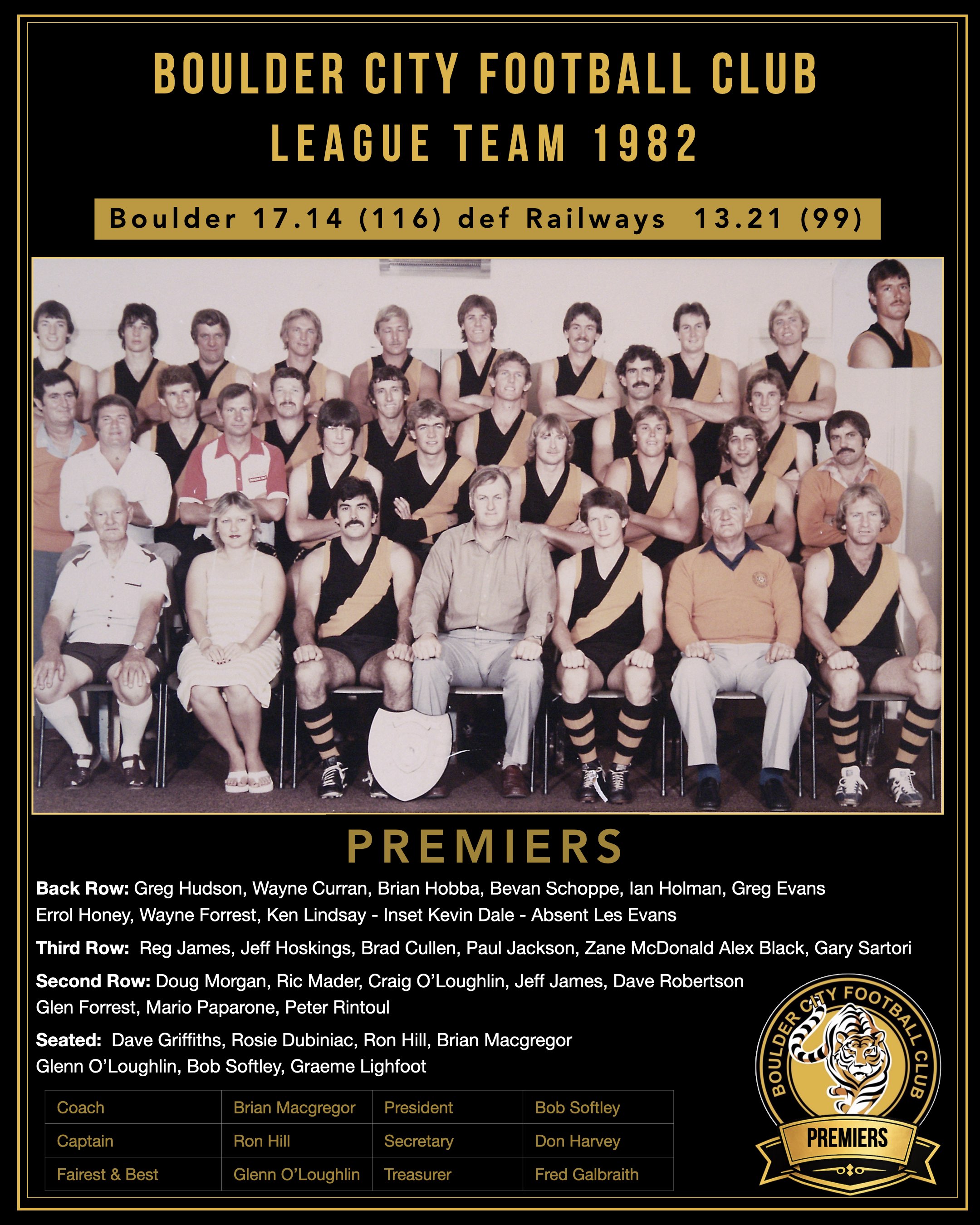
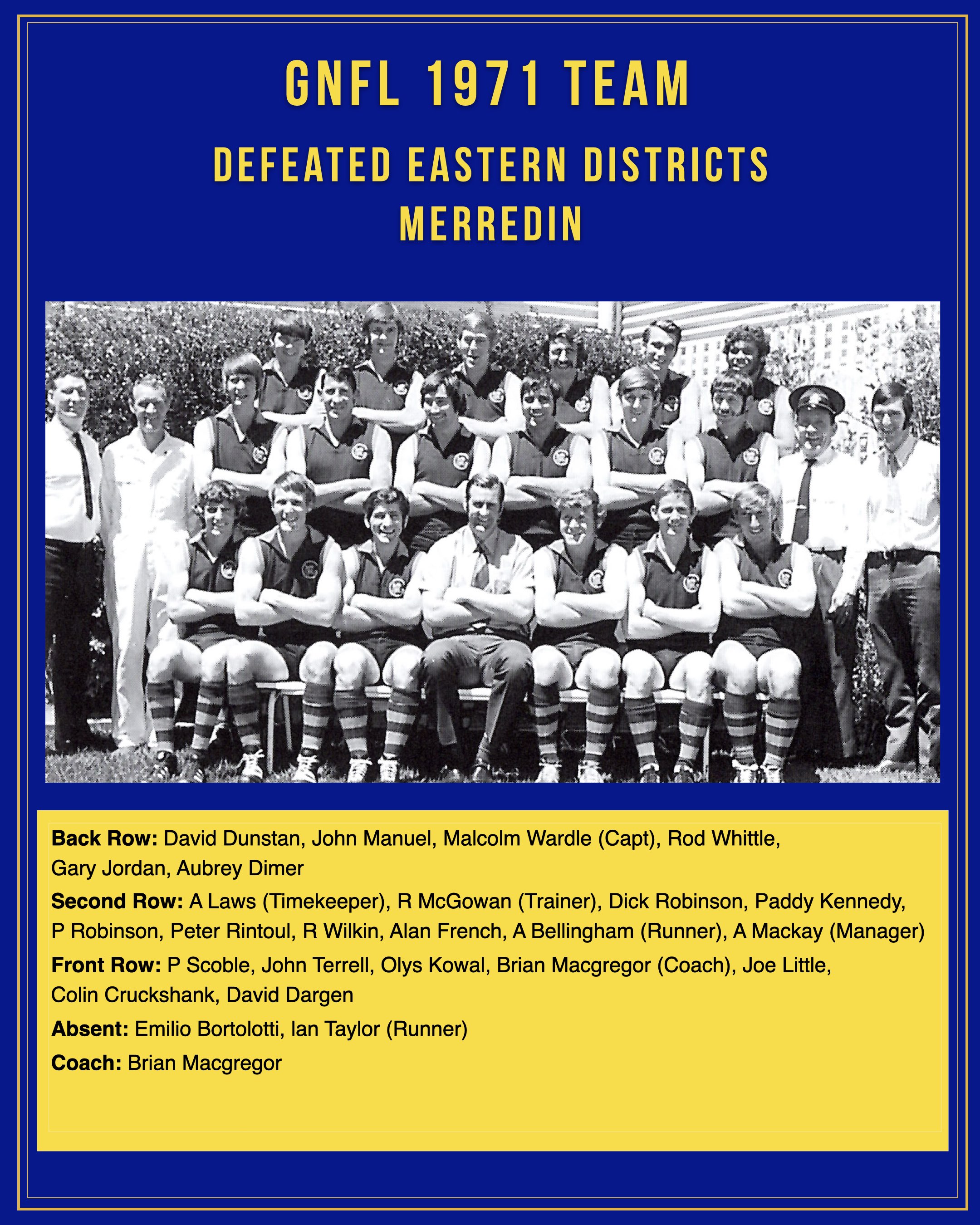
In 1970, Macgregor returned to the Goldfields. His original intention was to resume playing with Mines Rovers, the club where his football journey had begun. Then came an approach from Boulder. The Tigers wanted him as coach. The offer was sufficiently persuasive to change his plans.. Macgregor accepted, beginning a relationship with the Boulder City Football Club that would eventually extend far beyond his time in the coaching box.
He coached Boulder for two seasons, bringing with him the experience, discipline and football knowledge developed during his years at East Perth. He was even known to take his place in the centre during matches, demonstrating that his powerful kicking had lost little of its effectiveness.
After his playing career ended, Macgregor went on to be a highly successful Goldfields coach and holds the distinction of notching premierships in all three senior grades.
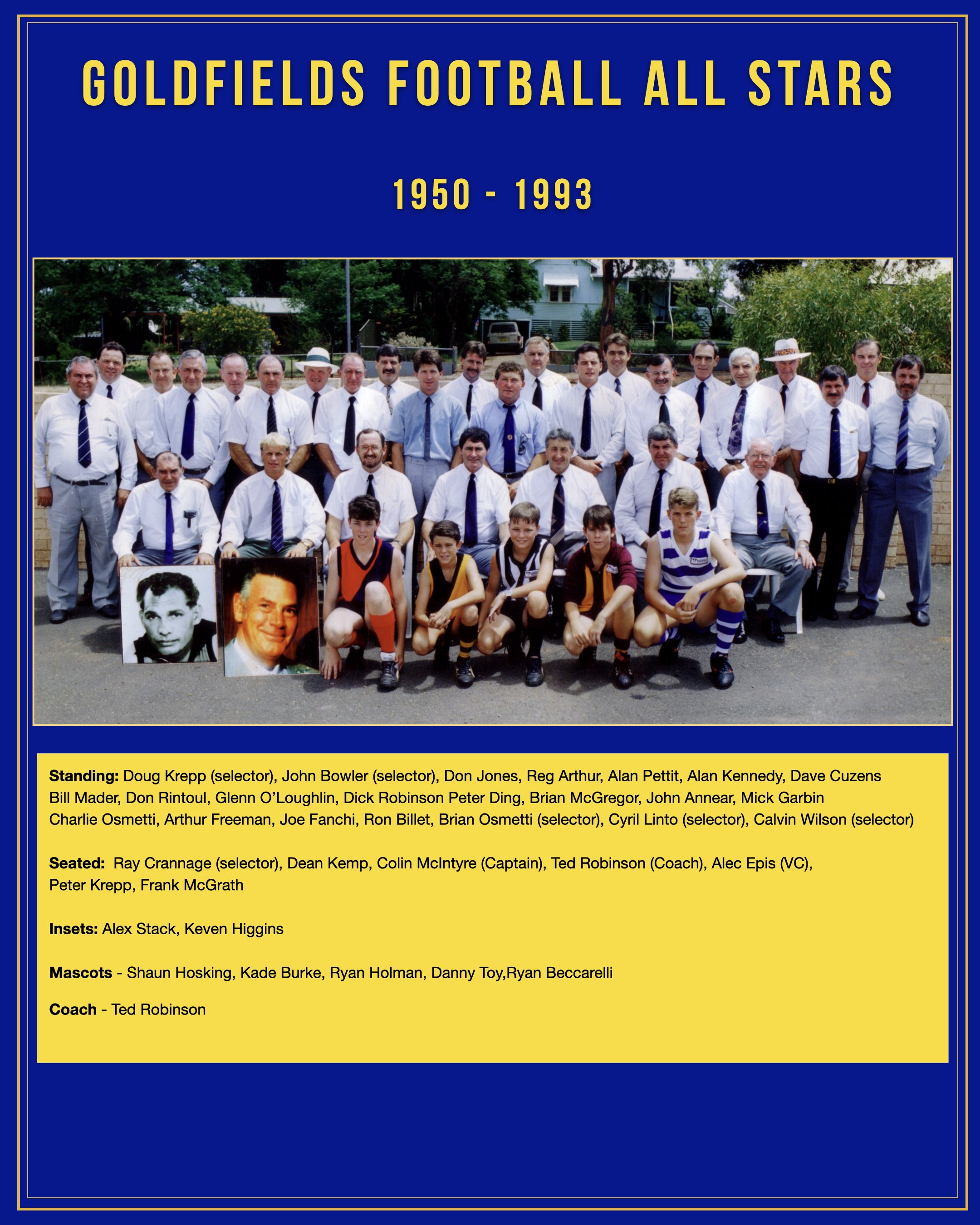
In 1975, Macgregor led Boulder's colts line-up to a premiership and four years later was at the helm of Mines' reserves side which captured the flag. He led Boulder to the league premiership in 1982 and coached the Goldfields senior side on six occasions and the Under 20 side four times.
The 1982 grand final, in which Macgregor guided Boulder to a 17-point win over Railways, ranks among the most controversial in GFL history, with the Panthers' Neville Brierley suspended for 34 weeks on striking and head-butting charges. Macgregor's coaching career also includes several seasons with Inglewood in the Perth Sunday League.

THE MAN BEHIND THE CLUB
For many footballers, retirement from playing and coaching marks the end of their active involvement. For Brian Macgregor, it was another beginning.
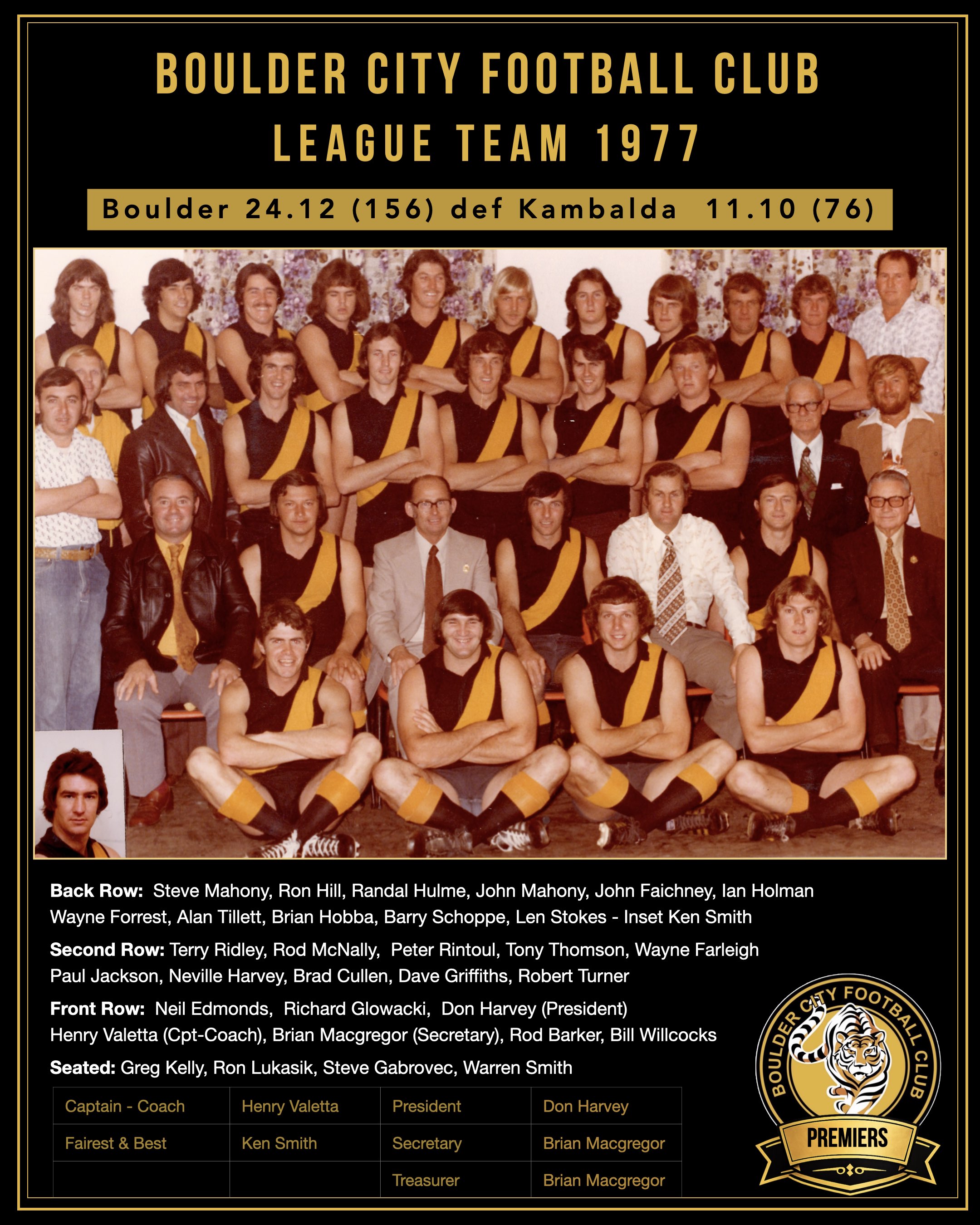
He became deeply involved in the administration of the Boulder City Football Club, serving in senior leadership positions including:
-
Club President
-
Club Secretary
-
Club Treasurer
The club's historical office-bearer records also reveal the remarkable continuity of his involvement.
1975, 1976 and 1977 — Macgregor appears in two of the three office-bearer columns for each year.
1985 — His name appears again in the club's leadership records. These entries provide a glimpse of the work that often goes unseen in a football club. While players and coaches receive much of the public recognition, the survival and success of community football depends equally upon those prepared to take responsibility for the organisation itself. Macgregor was one of those people.


RECOGNITION BEYOND THE TIGERS
Brian Macgregor's contribution was recognised at club, league and regional levels.
His honours include:
-
Boulder City Football Club — Life Member
-
Recognition of his enduring service to the Tigers.
-
Goldfields Football League — Life Member
-
Recognition of his contribution to football across the wider Goldfields community.
-
Goldfields Sporting Hall of Fame — Inducted 2014
His contribution to the sport was formally recognised by the WA Football Commission in 1991, when he was the recipient of a special volunteer award. He has also served on the GFL charges tribunal, was league president from 1987 to 1991 and acted as regional chairman of the WA Football Development Trust for several years before relinquishing the role in 1995.
Macgregor was one of the new faces of Australia Post as the first person in the Goldfields to have a batch of stamps released featuring his face.

THE LEGACY OF “BULLA”
A talented youngster from the Goldfields became a respected League footballer. A respected League footballer returned home to become a coach. And that coach became one of the men who helped guide the Boulder City Football Club through years of change.
His football journey crossed clubs, competitions and generations. But his contribution to Boulder was about more than matches, trophies or positions held. It was about service. Brian “Bulla” Macgregor — a Tiger legend whose greatest achievement may well have been everything he did after the final siren.
Boulder Tigers — Past, Present & Future
Preserving the people, the history and the stories of the Boulder City Football Club.

Past Players

1896 - 2026

Museum
